Virginia Gold: Belt, Creeks & How to Research It
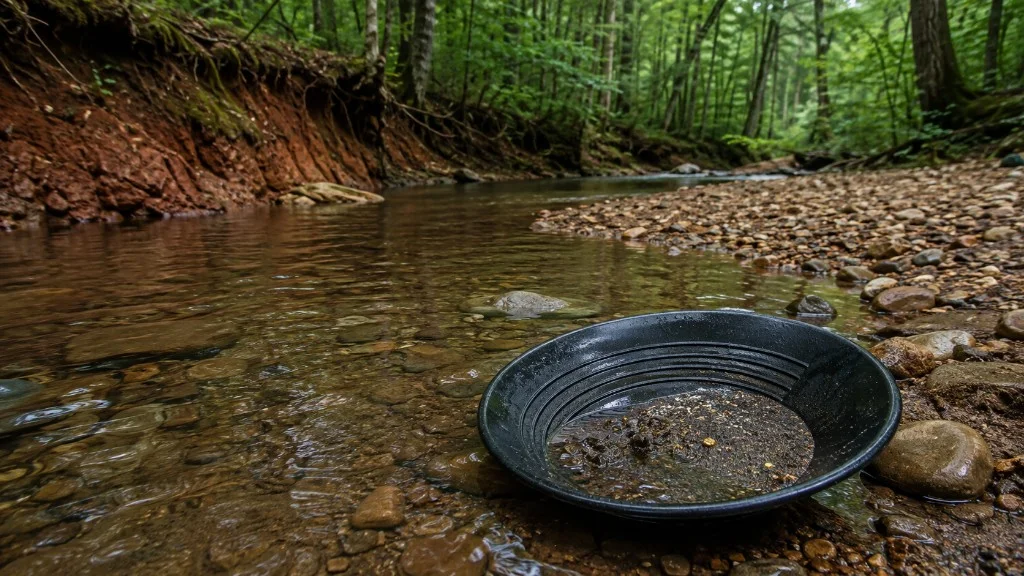
Virginia Gold is real. The Commonwealth produced gold for more than 200 years - long before the western rushes - along a band of mineralized ground known as the Gold-Pyrite Belt.
For the statewide hub, see gold in Virginia.
If you searched for Virginia Gold because you want the mineral story (not a brand name), this guide is the place to start: where it occurs, how it formed, how creeks concentrate placer flakes, what's legal to pan, and how to research on the map before your boots hit the water.
Today Virginia remains one of the best East Coast places to learn VA gold prospecting - from historic lode mines to the drainages that still carry placer gold.
As I like to say:
The real work happens before the boots ever hit the creek.
Understanding the geology, history, and patterns of the land is what turns curiosity into discovery.
Is There Virginia Gold?
Yes. Virginia Gold is documented in state mineral records, historic mine inventories, and more than a century of field reports.
What people usually mean by Virginia Gold is not jewelry scrap or a product brand - it is native gold in rock and creek gravel across the Gold-Pyrite Belt. Commercial mines are mostly gone, but the geology that made them did not leave with the stamp mills.
Hobby finds today are usually fine placer gold in creeks that drain old mineralized ground. The map is how you study that relationship before you dig.
The Virginia Gold Belt
Virginia Gold-Pyrite Belt
Most of Virginia's gold occurs along a geological formation known as the Virginia Gold-Pyrite Belt. This belt stretches across the central part of the state - roughly 175 miles northeast to southwest from just south of Washington, D.C., into the central Piedmont - and contains hundreds of historic gold mines.
More than 95 percent of known historic gold mines and prospects sit in the Piedmont. The Gold-Pyrite Belt is the main band. The Virgilina district in Halifax, Charlotte, and Mecklenburg Counties is the second major cluster. A few smaller Blue Ridge occurrences exist, but the research density on the map is Piedmont ground.
The belt formed hundreds of millions of years ago during ancient mountain-building events when tectonic forces pushed together pieces of the Earth's crust. These events created fractures and fault zones that allowed mineral-rich fluids to move through the rock.
As those fluids cooled, they deposited minerals such as:
- quartz
- pyrite
- sulfides
- gold
Over time, erosion broke down these veins and carried gold into nearby creeks where placer deposits formed.
Understanding this belt is the key to understanding Virginia Gold.
How Virginia Gold Sits in the Rock
Virginia's principal deposits are low-sulfide, gold-quartz veins: often lens-shaped, steeply dipping, with only a few percent pyrite in the ore. Near the surface, oxidized rock often held free gold that early miners took with pits and trenches. Deeper ore locked more gold in pyrite and needed underground work.
That is why historic camps leave messy LiDAR footprints, and why creeks downhill from old veins still matter for placer research.
For the fuller rock story (belt vs Virgilina, massive sulfides nearby, and how to read it on the map), see How Virginia's Gold Actually Sits in the Rock.
Counties Known for Gold in Virginia
Several counties sit directly on the Virginia Gold Belt and have produced gold historically.
These include:
- Louisa County, Virginia
- Spotsylvania County, Virginia
- Orange County, Virginia
- Buckingham County, Virginia
- Goochland County, Virginia
- Prince William County, Virginia
- Stafford County, Virginia
- Fairfax County, Virginia
- Halifax County, Virginia (Virgilina)
- Charlotte County, Virginia (Virgilina)
- Mecklenburg County, Virginia (Virgilina)
Many historic mines were developed in these areas during the 1800s when gold mining became a significant industry in Virginia. Belt counties hold most of the named producers. Virgilina counties are the second Piedmont district worth putting on your research list.
While the large commercial mines are long gone, the geological patterns that created them are still visible today for those willing to study the land carefully.
A Short History of Gold Mining in Virginia
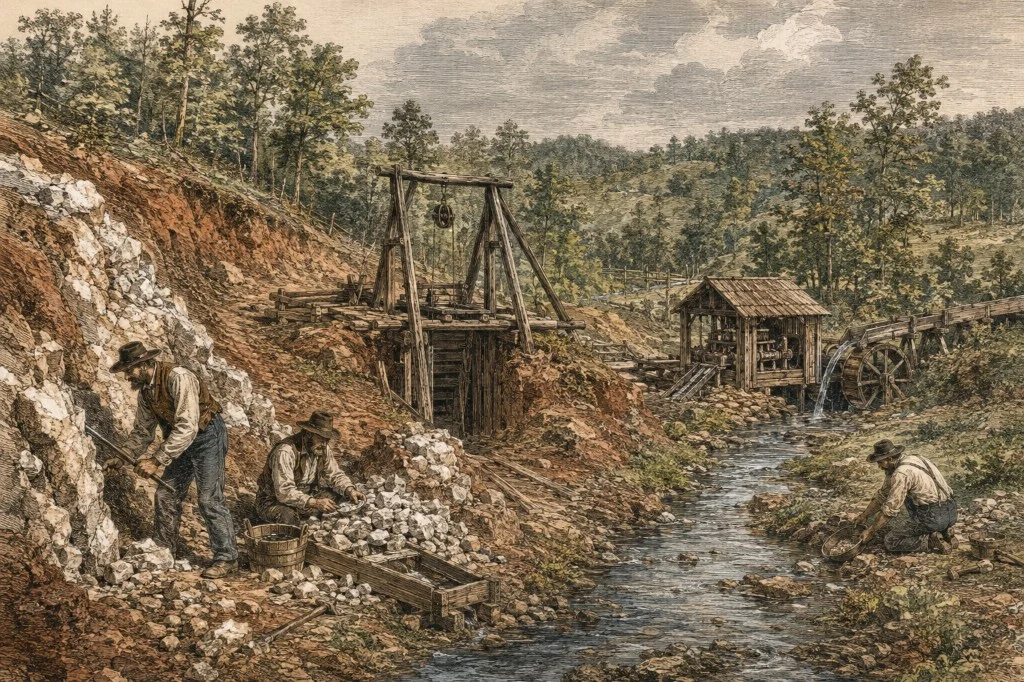
Virginia's gold story has deep roots. An early written reference is Thomas Jefferson's 1782 note of a gold-bearing rock along the Rappahannock near Fredericksburg. The full specimen story, including the 4-pound ore (not a 7-pound nugget), is in Jefferson's Rappahannock Gold. The first well-known lode locality is usually dated to 1806 at Whitehall Mine in Spotsylvania County.
Virginia experienced a gold rush decades before California. Roughly 100,000 ounces were produced from the early 1800s through 1947, with peak years from the mid-1830s through the mid-1850s.
During the 19th century:
- Hundreds of gold mines opened across the gold belt and Virgilina district
- Shallow pits and trenches took near-surface free gold first
- Underground shafts followed steep quartz veins once oxidized ore thinned
- Stamp mills crushed ore to extract gold particles
Some of the most productive mining districts were in Louisa, Buckingham, Spotsylvania, and Orange counties, with additional historic work in the Virgilina district to the south.
By the early 1900s, many mines had closed due to:
- falling gold prices and western competition after 1849
- increasing mining costs
- the difficulty of extracting deeper, less free-milling ore
Last commercial gold production is commonly dated to 1947. The historic mine locations still provide valuable clues about where Virginia Gold occurs in the landscape.
Placer Gold vs Lode Gold
To understand gold prospecting in Virginia, it helps to know the difference between two types of deposits.
Lode Gold
Lode gold is gold still locked inside rock formations such as quartz veins.
In Virginia those veins are often lens-shaped and steeply dipping, with free gold nearer the surface and more pyrite-bound gold at depth.
Historic mines usually started in the oxidized zone, then followed the vein underground when shallow ore played out.
Placer Gold
Placer gold is gold that has been released from rock and carried by water.
Over thousands of years, streams and rivers concentrate gold into certain locations such as:
- inside bends of creeks
- bedrock cracks
- behind large rocks
- layers of black sand
Most modern hobby prospecting in Virginia focuses on placer gold in creeks.
Reading Virginia Creeks for Gold
Creeks are nature's gold concentrators.
Because gold is very dense, it tends to settle in specific locations where water slows down.
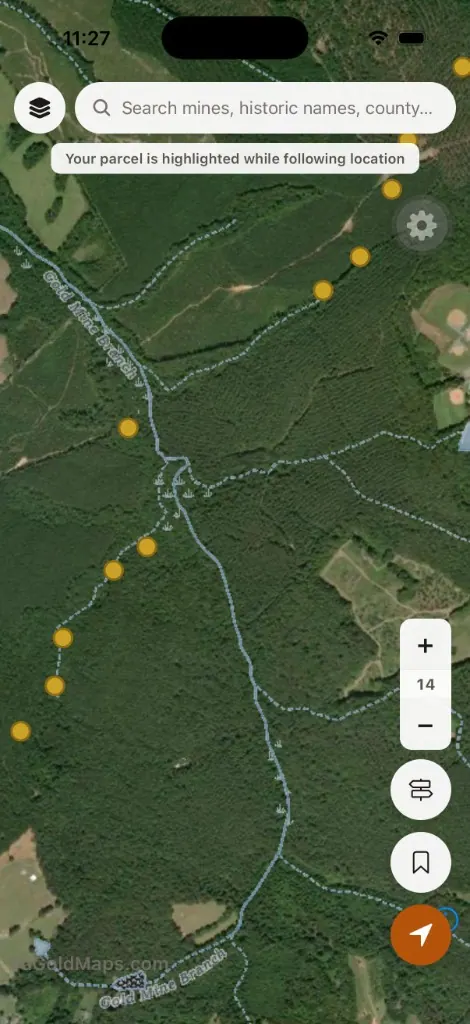
Some of the best places to check include:
Inside Bends
When a creek curves, the inside bend slows the current. Heavier materials like gold settle here.
Bedrock Cracks
Gold often gets trapped in cracks in exposed bedrock.
Behind Large Rocks
Large boulders create low-pressure zones where gold can drop out of the current.
Black Sand Layers
Black sand often contains heavy minerals that settle alongside gold. When you find black sand in a creek, it can be a good indicator that you're in the right environment.
Why Research Matters
One of the biggest mistakes beginners make is heading straight to the creek without understanding the land first.
Successful prospectors often spend more time studying than digging.
Research topics include:
- historic mine records
- geological maps
- mining districts
- creek drainage patterns
Understanding where gold formed historically can help narrow down where placer deposits may exist today.
Again, the principle holds true:
The real work happens before the boots ever hit the creek.
Responsible Prospecting in Virginia
Anyone interested in prospecting should always take time to verify:
- land ownership (about 84 percent of Virginia is private land)
- property permissions
- mining claims
- local regulations
Respect for the land and the people who manage it is essential for keeping the hobby alive for future generations.
Also treat historic mill sites and dumps carefully. Mercury amalgamation was used in Virginia in the 1800s and early 1900s. Legacy mercury can remain in soils and sediments at old workings.
Prospecting should always be approached with care, research, and respect. For public-land rules, see prospecting on U.S. Forest Service land. For the rock story behind the pins, see how Virginia gold sits in the rock.
Common Questions About Virginia Gold
These are the questions people ask most when they start researching Virginia Gold and gold prospecting in Virginia - short answers first, then links to dig deeper.
Where should I prospect for gold in Virginia?
Start with the Virginia Gold-Pyrite Belt - the band of historic mining counties across central Virginia where gold-bearing geology is concentrated. Use the VaGoldMaps map to see historic mines, streams, and structure together, then narrow to drainages below old workings. Pair that with historic mine details and the streams layer guide.
Where is the most gold found in Virginia?
Historically, the richest production came from districts inside the Gold-Pyrite Belt: places like Louisa, Buckingham, Spotsylvania, Orange, and neighboring counties along the belt. The Virgilina district is the second major Piedmont cluster. Statewide historic production is on the order of about 100,000 ounces through 1947. Modern hobby finds are usually fine placer gold in creeks that drain those same mineralized areas, not brand-new lode discoveries.
Can you find gold in Virginia creeks?
Yes. Most modern VA gold prospecting focuses on placer gold - flakes and flour gold that weathered out of quartz veins and settled where the current slows. Look for inside bends, bedrock cracks, behind large rocks, and black-sand layers. Trace those drainages on the map with the streams layer guide.
Is it legal to pan for gold in Virginia?
It depends on the land. Always confirm ownership and get permission on private property. State parks and many protected areas prohibit collecting. On U.S. Forest Service land, small-scale recreational panning may be allowed under strict rules - see prospecting on U.S. Forest Service land. When in doubt, ask the land manager before you dig.
The Continuing Mystery of Virginia Gold
One of the fascinating things about Virginia Gold is that much of it remains undiscovered.
The historic mines show that the region once supported a thriving mining industry, yet modern prospecting has barely scratched the surface of the landscape's geological history.
For those willing to study maps, geology, and creek patterns, Virginia still offers a wealth of discovery.
Sometimes the smallest speck of gold tells a much larger story about the land beneath your feet.
Final Thoughts
Gold prospecting is not just about finding gold.
It's about learning to read the land.
Every creek bend, rock layer, and historic mine tells part of the story.
Virginia's gold belt remains one of the most interesting geological regions in the eastern United States, and there is always more to learn.
For those who enjoy research, exploration, and time spent outdoors, the journey itself can be just as rewarding as the gold.