Can You Prospect for Gold in National Forests?
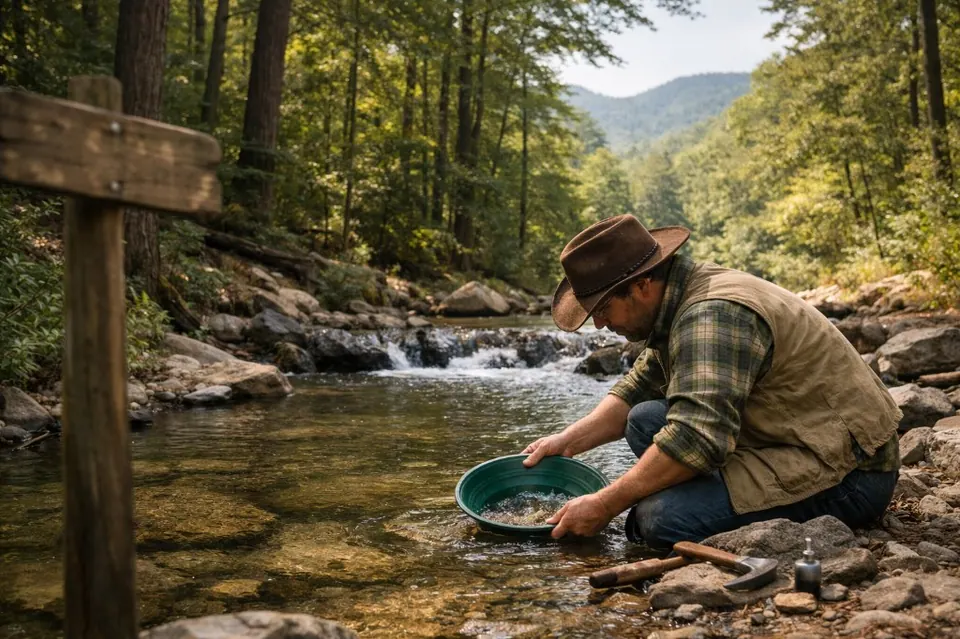
Yes - gold prospecting is allowed on many U.S. Forest Service (USFS) lands, but there are important rules every prospector needs to understand before heading to the creek.
National Forests are considered multiple-use public lands, which means activities like recreation, logging, grazing, and mineral exploration can occur under federal regulations.
Below is a clear breakdown of what is generally allowed and what restrictions apply.
Recreational Gold Panning on National Forest Land
In most National Forests, casual prospecting is allowed without a permit if it remains small-scale and low impact.
Typical recreational prospecting methods include:
- Gold panning
- Small non-motorized sluice boxes
- Metal detecting for minerals
- Hand tools such as small shovels or trowels
The U.S. Forest Service generally considers this casual use, meaning activities that cause little or no surface disturbance.
These activities usually do not require special permits when done responsibly.
Source: U.S. Forest Service – Gold Panning and Prospecting
Mining Claims Still Apply on National Forest Land
Even though National Forest land is public, existing mining claims take legal priority.
If an area has an active mining claim:
- The claim holder has mineral rights
- Prospecting without permission is considered trespassing
- Removing gold from a claim could be considered claim jumping
Prospectors should always check for claims before working an area.
The Bureau of Land Management (BLM) maintains federal mining claim records. For the western difference between patented and unpatented claims, see Gold Claims Out West.
Sources:
Areas Where Prospecting May Be Restricted
Some areas within National Forests are closed to mineral activities, including:
- Congressionally designated Wilderness Areas
- Research Natural Areas
- Archaeological or historic sites
- Mineral withdrawal zones
- Certain protected waterways
Before prospecting, it is recommended to contact the local Forest Service Ranger District for current restrictions.
Source: U.S. Forest Service Mineral Regulations
When Permits Are Required
Larger prospecting activities require approval from the Forest Service.
Two common filings include:
Notice of Intent (NOI)
Filed when exploration activities may cause minor surface disturbance.
Plan of Operations (POO)
Required when activities involve:
- Mechanized equipment
- Suction dredging
- Excavation
- Drilling
- Significant land disturbance
The Forest Service may conduct environmental review before approving operations.
Source: USFS Regulations – 36 CFR 228 Subpart A
National Forest vs National Parks
Prospecting rules vary greatly depending on the type of federal land.
| Land Type | Prospecting Allowed |
|---|---|
| National Forest (USFS) | Often allowed with restrictions |
| Bureau of Land Management (BLM) | Often allowed |
| National Parks (NPS) | Generally prohibited |
National Parks protect natural resources, including minerals and gold.
Source: National Park Service – Mineral Resources Protection
State Regulations Still Apply
Even on federal land, state laws governing waterways and mining still apply.
These laws may regulate:
- Dredging
- Stream alteration
- Water usage
- Equipment types
Prospectors should review both federal and state regulations before working an area.
Key Takeaway
In most cases, recreational gold prospecting on National Forest land is allowed if you follow three simple rules:
- Stay off active mining claims
- Avoid restricted or protected areas
- Keep activities small-scale and low impact
Responsible prospecting helps protect access to public lands for future generations. For the full Virginia Gold research guide - belt, creeks, and map workflow - start there before any field day.