When the Leaves Drop, the Rock Shows
Cool air does not find gold. It lets you see the bank.
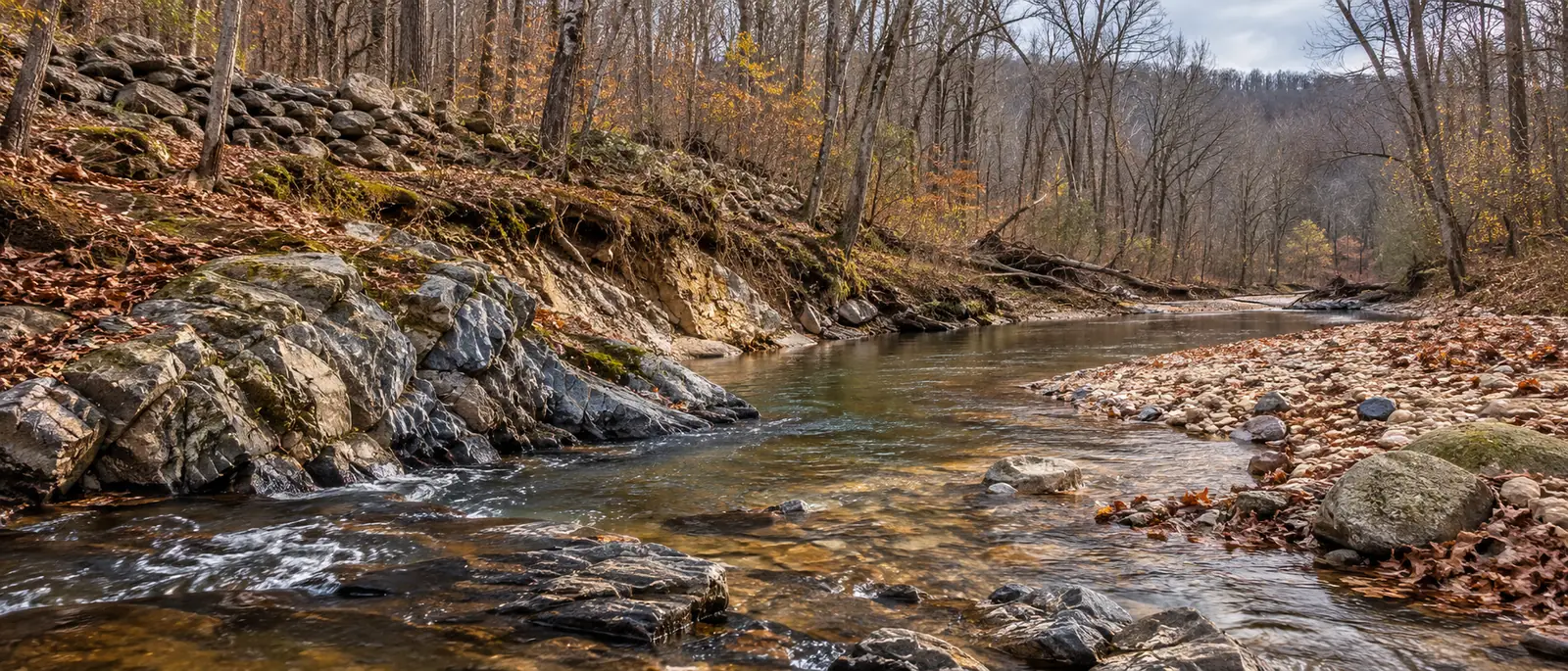
When the leaves come down in late fall, the creek looks different. The brush thins out. The green wall is gone. You can see a long way down the bank. Fallen leaves can hide gravel, too. Kick them aside and look.
All summer, leaves hide the ground. Vines cover the rock. You walk right past things.
When the leaves drop, the rock shows.
You can see where bedrock pokes out of the bank. You can see gravel bars on the inside of a bend. You can see old diggings. Piles of rock. Ditches and cuts in the bank from miners long ago.
That is a lot to see. It is easy to get excited and just start walking.
Don't. Cool air does not replace research.
Dig into the map first. Turn on the Drainages layer. Follow the creek up and down. Look at the topo. Find where the land is steep and where it goes flat. Water slows down where it goes flat. Heavy gold drops out there.
Then look for clues. Turn on the Old workings layer. See which ones sit near the water. Read the place names, too. A name with "gold" or "mine" in it is not proof. It is a clue.
Now you have a plan. You know which bend you want to see. You know what rock you are looking for. You know why you are there.
Creek banks in Virginia are often private land. Ask first.
Then walk with your plan. Let the bare bank show you if the map was right.
Bare trees let you see the bank. The map tells you which bank matters.
Open the map. Dig into the layers. Let the ground pick the bend.