What Black Sand Tells You
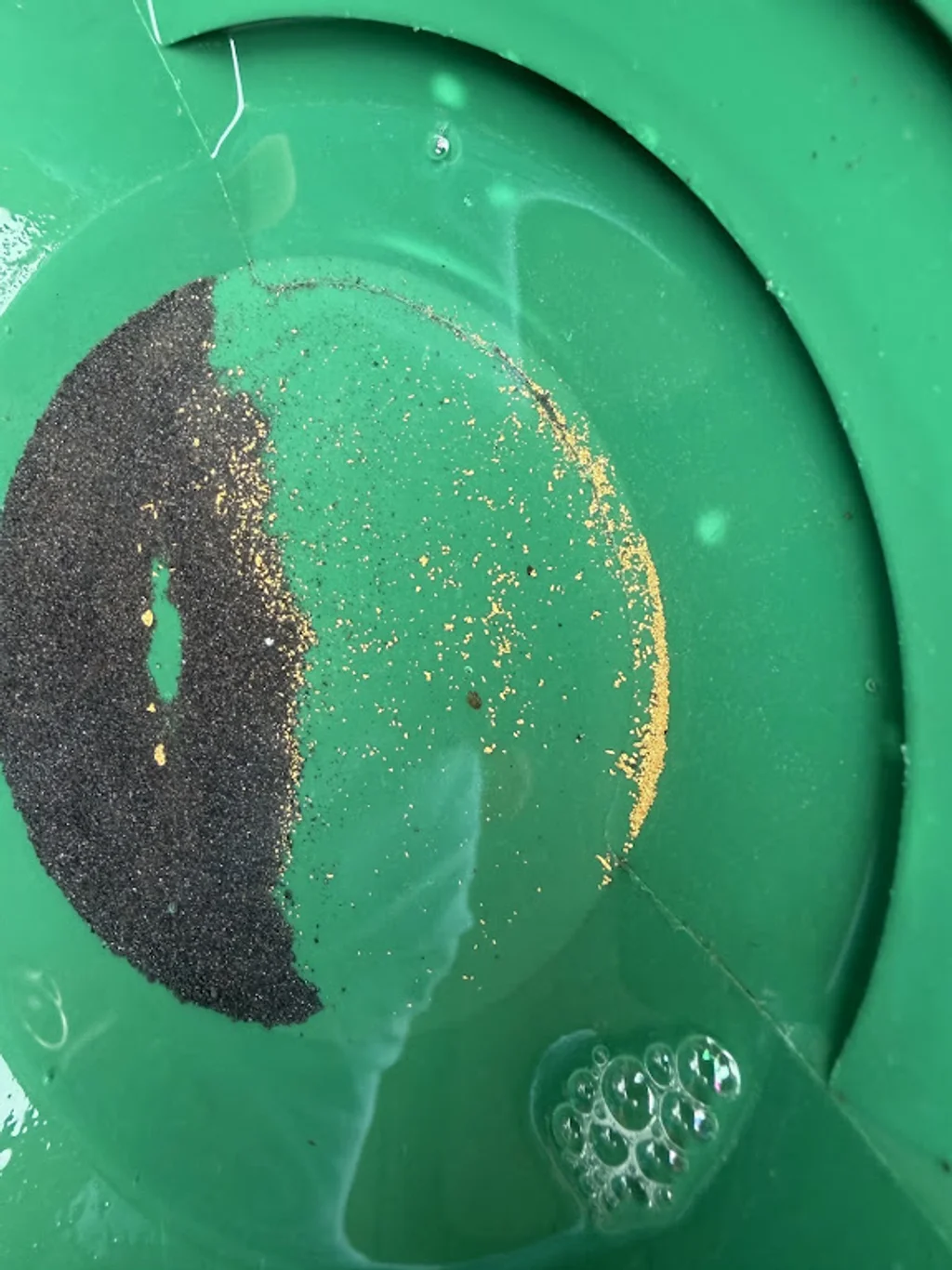
You tip the pan, and dark grit hugs the lowest spot. That dark grit is black sand, and it is trying to tell you something.
What black sand is
Black sand is not mud, and it is not fine black dirt from the bank. It is heavy mineral grains. Magnetite is a common one, and other heavy minerals can ride along with it. The grains look dark, feel dense in the pan, and stay put when lighter sand washes away.
Gold is heavier than black sand, and black sand is heavier than plain quartz sand. So the creek sorts them. Heavy grains settle first while lighter grains keep moving.
Why it matters when you pan
Slow water drops heavy stuff, and it drops gold too. Wherever the flow loses speed, heavy grains can fall out of the water. Inside bends do that, eddy pockets do that, and so can the upstream end, or head, of a gravel bar. Bedrock steps and tight pockets can hold what drops.
If you see a dark streak in the pan, you found a place where heavy stuff can gather. That is a clue, not proof that gold is there. Black sand can show up with no gold at all, and gold can hide in ground that looks plain. Still, the clue is useful, because it says this spot sorts by weight.
Watch how the pan behaves. Lighter sand leaves first, black sand hangs back, and gold, if any is there, hangs back even more. Work the wash slow and keep the heavy tail in view. Do not chase glitter in the cloudy water.
How to use the map
Open VaGoldMaps and turn on the Drainages layer. Trace the creek and find bends where the channel swings, the places where water would slow on the inside of a turn. Mark those bends, since those are the spots to check when you get to the bank.
Then turn on the Old workings layer and see if old diggings sit near that same stretch. Old workings are history. They show where people worked before. They do not promise gold today, but they do say someone thought the ground was worth a dig.
Pair that history with the bend you marked, and now you have a plan instead of a guess. The Drainages layer shows where the water runs, and the Old workings layer shows where people dug before. Your job is to connect the two, then walk the bank with that plan in your head.
One tip at the creek
Scoop from the head of a gravel bar, the upstream end, or from the inside of a slow bend. Keep the first pans small and watch for that dark streak. If black sand builds in the pan, stay on that patch a little longer and move only a short step at a time. Let the heavy grains teach you where the sorting is real. If the pan stays pale and light, move on, because that spot does not seem to be holding the heavy load.
Black sand is a weight signal, and gold is heavier still. Where the creek drops black sand, heavy stuff can settle, so read that as a clue and confirm it on the ground. Let Drainages pick the bend and Old workings add the history, then let the pan show you what that stretch can hold. Open the map, dig into the layers, let the black sand point, and let the pan decide.