What the Old-Timers Left Behind
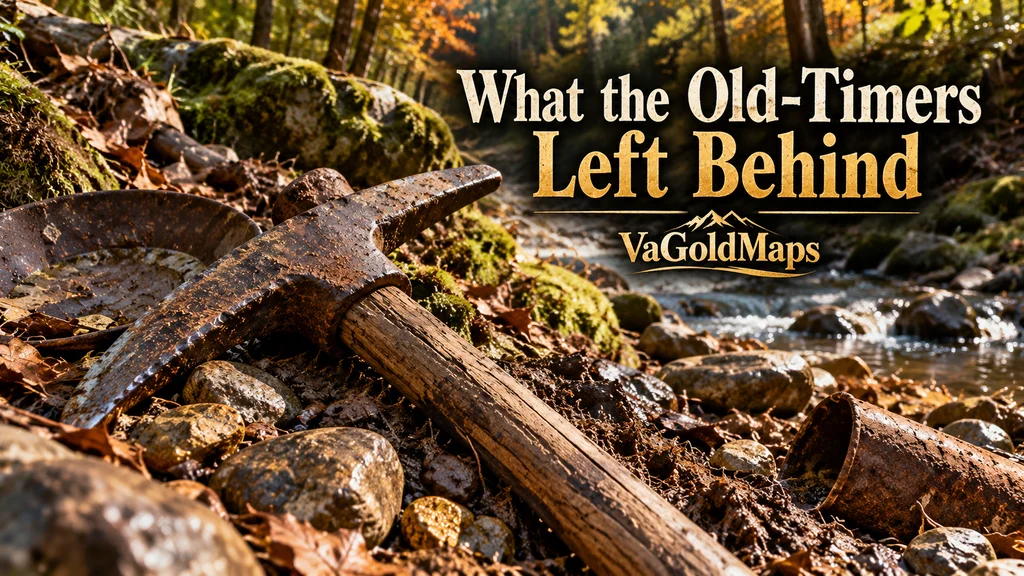
Back in the 1800s, gold miners worked creeks and hillsides across parts of Virginia. They did not leave us a map of every dig, but they did leave marks on the land. Old ditches, piles of rock, and dug-out pits can still be found in some places today. If you learn to read those marks, they can show you where people found gold and how they worked it. Look at the map first, and then read the ground.
Start with the map
Before you go out, open VaGoldMaps and turn on the Old workings layer. It marks places where people dug or mined in the past, so you can see where the old-timers spent their time. Then turn on the Drainages layer and trace the creeks that run near those spots. Old diggings often sit close to water, because many miners needed water to wash their gravel. When you see old workings and a creek close together, you have a good place to start reading.
What to look for on the ground
Once you are on the ground, slow down and look at the shape of the land. Piles of rock lined up in rows can be old tailings, which is the rock the miners tossed aside after they washed the gravel. Low ridges of clean, rounded gravel can be another sign that someone washed that ground. A ditch that runs along the side of a hill, almost level, may be an old ditch that carried water to the dig. Shallow pits that are now partly filled in with leaves and dirt can mark spots where someone dug down to look for gold.
What each mark tells you
Each mark is a clue about how the old-timers worked. A ditch can point you to where their water came from, since they had to bring water to the gravel to wash it. Tailings piles show you which gravel they dug and washed, and the line of piles can show which way the work moved. The place where the piles and pits end can show you where they stopped. Keep in mind that nature can make rock piles and dips too, so one mark alone does not prove a dig, but several marks together tell a clearer story.
Why it still matters
The old ways of washing gravel could miss some gold, and fine gold was often the hardest to catch. Some of that small gold may have washed out with the tailings, or it may still sit in gravel the miners never reached. Floods can also move gravel along a creek, and over many years that can bring new gravel into old work areas. None of this promises gold today. It just means old ground can still be worth a careful look.
Look, but do not touch
Old workings sit on someone's land, whether that is a private owner, a county, the state, or the federal government. Find out who owns the land and get permission before you walk in. If you find old stone walls, the remains of old buildings, or other old structures, leave them alone and do not dig into them or take anything away. Stay out of old shafts and tunnels, because they can cave in and are very dangerous. These old marks are part of the story, and the next person should get to read it too.
The old miners are gone, but their marks can still be found if you know how to look. Start with the Old workings layer and the Drainages layer to find where people dug in the past. Then walk the ground and look for rock rows, gravel ridges, level ditches, and filled-in pits. Each one is a page in the story, and with practice you can learn to read it.